
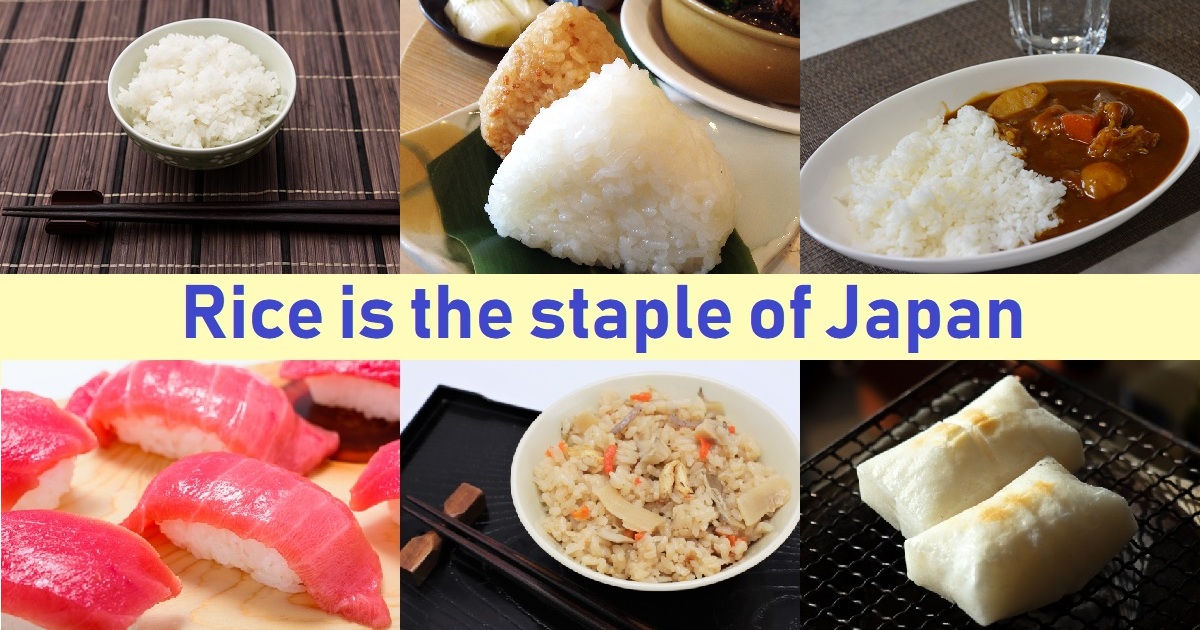
Rice and its various cooking, Mochi, Bread
Rice in Japan How to cooking rice How to eat rice deliciously Mochi Bread in Japan
Rice in Japan
Japonica rice
The kind of rice harvested in Japan is "Japonica rice".
It is one of the two major domestic types of Asian rice varieties.
Boiled Japonica rice is sticky and rather sweet, and it is less stiffened even when it becomes cold.
Another kind of rice is "Indica rice" and the grain is thinner, longer and less glutinous than Japonica rice.
It is mainly eaten in the southern part of Asia and Latin America.
The rice that Japanese people eat every day and use for Japanese cuisine is Japonica rice.
Japanese rural landscape
The rice is cultivated in most areas of Japan.
Probably, I think the scenery from the window of train or bus is almost rice field when you visit in the rural area.
In spring, farmers let water flow to rice fields and plant rice seedlings there.
Until the end of tsuyu (rainy season between spring and summer), we can see the scenery of rice field like many square ponds.
In summer, rice grows up.
We can see the rice fields like green field of grass.

Rice-planting in spring

Green rice field in summer
In autumn, the color of rice changes from green to yellow and rice bears.
It looks like golden carpet.
After harvesting, we can see stubble fields.
Until next spring, the fields are allowed to lie fallow.

Ripe rice plants in autumn
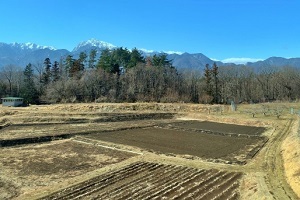
Rice field in winter
How to cooking rice
Harvested rice is threshed, then the grain is polished by milling machine.
We can buy the polished rice at the shop.
The most basic method of rice cooking is boiling in water in Japan.
- Wash raw rice with water.
- Put the rice into a pot, and add 1.2 times the amount of water to rice.
- Put the pot with a lid over high heat.
After this, don't open the lid until finish. - When it begins to boil, turn the heat to medium.
- Turn off the heat, when water is boiled away. You can't look into the pot, so this requires years of experience.
As a rough guide, it is for 30 minutes. - After waiting for about 15 minutes, you can eat the tasty rice.
This is the traditional procedure, but most people today cook rice with electrical or gas rice cooker.
It cooks rice automatically from above (3) to (5).
Boiled rice is very white and soft, and we feel slightly sweet in our mouth.
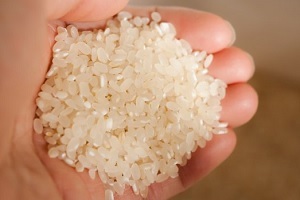
Raw polished rice
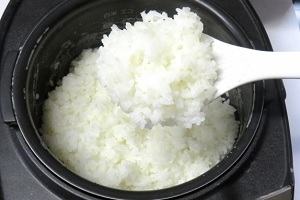
Just cooked hot rice
Basically, the boiled rice is put into a small bowl and is served.
You hold chopsticks on your dominant hand, and hold up the bowl by another hand.
Then, you put the rice into your mouth from the bowl close to the mouth with chopsticks.
That is the basic way to eat rice in Japan.
How to eat rice deliciously
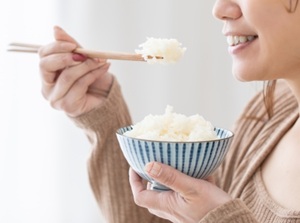
How to eat rice
We usually eat boiled rice with a small rice-bowl.
The hot boiled rice is tasty.
The taste is slightly sweet but is simple.
Then, we can enjoy the variety of flavors by eating side dishes seasoned in different ways.
This is the most basic way to eat rice.
But, it is common to add flavor to the basic rice from the start.
There are a few foods for topping on the rice.
They have a little strong flavor, so they make rice more tasty by topping them a little.
Furikake is dry seasoning.
It consists of salt, chopped katsuobushi (dried and ground bonito), sesame seeds, chopped nori (seaweed), etc.
Various furikakes of unique combination of the ingredients are sold.
Tsukudani is a food that an ingredient are simmered in shoyu (soy sauce) and mirin (seasoning of sake and sugar).
The color of any tsukudani is very dark by boiling in thick soy sauce.
As the ingredient, seafood (small fish, shellfish, shrimp), meat or seaweed (konbu, nori) are simmered in shoyu (soy sauce) and mirin (seasoning of sake and sugar).
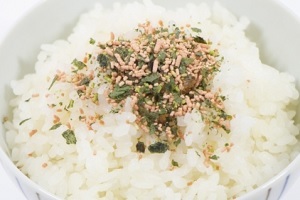
Furikake on rice
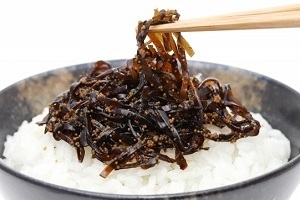
Tsukudani of Konbu
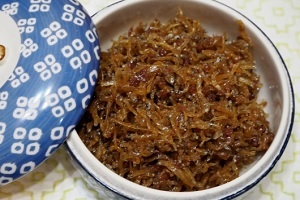
Tsukudani of small fish
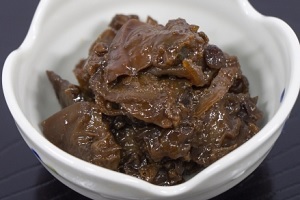
Tsukudani of shellfish
Natto is a Japanese popular fermented food of soybeans.
After stirring Natto and a little shoyu with chopsticks, it is put on on boiled rice and mixed.
The people who like Natto often do so.
For foreign people, it sometimes seems strange that Japanese people eat eggs raw.
But raw egg and hot rice are popular for Japanese people.
(Raw eggs in Japan have been sold under sanitary management of high quality.)
After beating a raw egg with a little shoyu, it is poured on boiled rice and mixed.
Many Japansese people like this.
It is called Tamago-kake-gohan in Japanese.
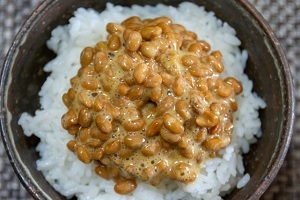
Natto on rice
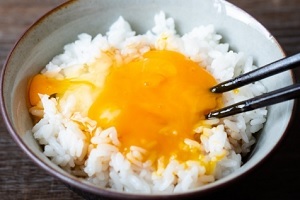
Tamago-kake-gohan
Various cooking of boiled rice
Onigiri
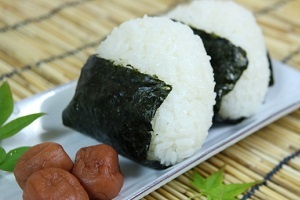
Onigiri
It is a rice ball formed into triangle or oval shapes and wrapped in nori.
It is also called Omusubi.
Onigiri is made by gripping hot boiled rice with both palms softly and forming it, so it is often made at home as the portable box lunch.
Generally, it is filled with umeboshi (Japanese salt plum pickles), salted salmon flakes, katsuobushi or any other salty or sour ingredient.
Most convenience stores stock various onigiris in many popular fillings and tastes.
Takikomi-gohan
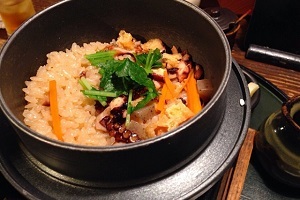
Kama-meshi
Before rice is boiled, dashi and shoyu are mixed into water.
And generally chopped vegetables and mashrooms are mixed together.
Completed rice is very tasty, because it is flavored by soup and ingredients.
"Takikomi" means "boil and mix".
This is also called "Gomoku-gohan" (rice with various ingredients), "Aji-gohan" (tasty rice) or "Maze-gohan" (mixed rice).
In Kansai area, this is called "Kayaku-gohan" (rice with ingredients).
It is often served by cooking in a small iron pot in Japanese restaurant and is called "Kama-meshi".
Kayu
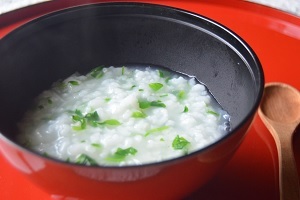
Kayu
Kayu is Japanese rice porridge.
It made by boiling rice with 5 to 7 times the amount of water.
Because it is one of the healthy menu of Buddhist cuisine, we often make it when we are ill.
And some hotels prepare it as breakfast.
Zosui
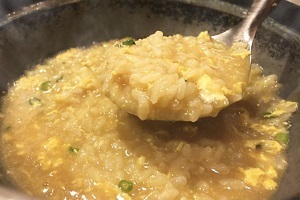
Zosui
Zosui is a dish made by simmering boiled rice in dashi soup.
It is like Kayu cooked in a delicious broth.
It is also similar to risotto.
After eating up the pot dish, tasty soup remains in the pot.
Boiled rice is put into the pot, and is boiled for a few minutes.
It is the tasty Zosui.
Zosui is mainly made in these situations.
Ochazuke
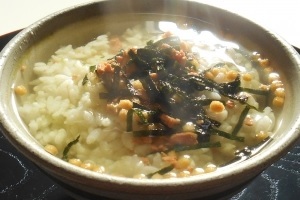
Ochazuke
Hot water, hot green tea or dashi soup is poured on the rice in the rice-bowl.
Because we can shovel the watery rice into our mouth, we can eat rice rapidly or smoothly.
For adding salty taste, there are dried Konbu chips with salt or furikake for Ochazuke.
Ochazuke is different from Kayu because it is made by simply pouring hot water over rice without boiling it.
Sometimes we make ochazuke to eat up leftover rice more easily.
Sekihan
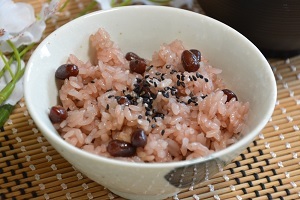
Sekihan
Sekihan is made by boiling rice with azuki (small red beans), so the rice color becomes reddish brown.
It has long been made as a lucky charm for special occasions and celebrations in life.
Therefore, you will almost never find red bean rice on the menu of a restaurant or in a hotel and ryokan.
Japanese food for eating with rice
Many popular Japanese dishes are actually fast food invented for people who are busy and need a quick meal.
Sushi
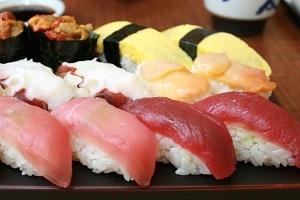
Sushi
Sushi is the most well-known and popular Japanese cuisine using vinegared boiled rice.
"Nigiri sushi" is the type that bite-sized vinegared rice is topped with slices of raw fish.
"Sushi roll" is the type that some ingredients are wrapped in vinegared rice and Nori (dried seaweed).
Donburi (Rice bowl dishes)
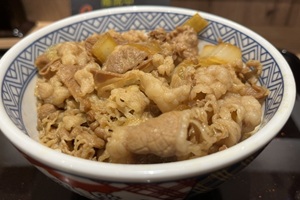
Gyudon
Donburi is a dish that boiled rice is placed in a large bowl and topped with side dishes.
"Gyudon" is topped with simmered beef and onion.
"Tendon" is topped with a few pieces of tenpura
"Katsudon" is topped with tonkatsu and simmered egg and onion.
Curry and rice
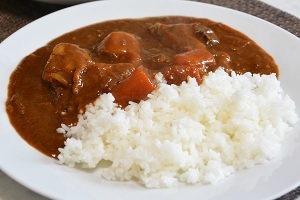
Curry and rice
Curry originated in India, but it became a dish to eat rice deliciously in the Western style.
Boiled rice is placed on a plate and curry sauce is poured over it.
It is eaten with a spoon.
This is the most popular dish liked by everybody in Japan.
Mochi
Mochi is translated as rice cake in English.
A little polite expression is Omochi
The rice for mochi is different from common rice and is very sticky when steamed.
The rice is called "mochi-gome".
Mochi is made by pounding steamed mochi-gome into sticky paste like bread dough.
Immediately after it is created, it is very soft.
But it gradually gets hard.
Recently, most mochi are produced in the factory and are sold in many shops.
Traditional mochi pounding is mainly held as the popular local event.
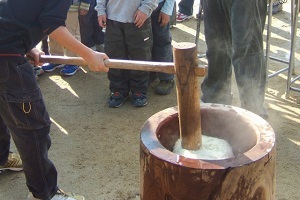
Pounding Mochi
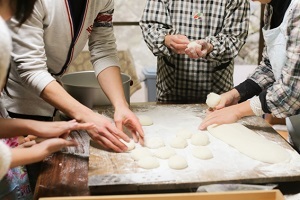
Making mochi after pounding
Since ancient times, mochi has been a food for the happy day in Japan.
Especially, there is a custom to eat mochi on New Year's Day.
During New Year's Days, special mochi is offered to the gods.
It is called as "Kagami-mochi".
Kagami-mochi consists of two round rice cakes and the smaller placed on the larger.
And an orange is put on the top.
It is decorated on household altar or important place in the house.
For the first breakfast of New Year, Zoni is served.
Zoni is the soup boiled with a piece of mochi, vegetables and a few other ingredients.
And decorated Kagami-mochi is eaten after the end of New Year's week.
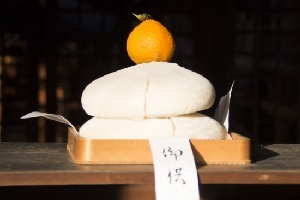
Kagami-mochi offered in Shinto shrine
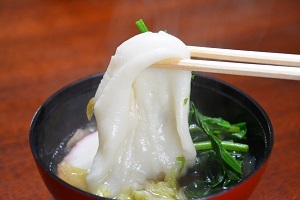
Zoni
Mochi is the rice substitute around New Year's days.
Broiled mochi is also eaten.
Mochi is also used as a topping for traditional sweet dishes such as "Zenzai" and "Shiruko".
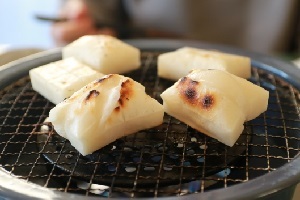
Broiling mochi
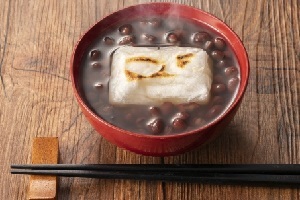
Shiruko topped with mochi
Gyuhi
Gyuhi is a type of mochi made by kneading rice flour with ingredients such as sugar.
("U" in the word is pronounced as a long vowel like "Gyūhi".)
It is incredibly soft, mildly sweet, and has a chewy texture.
Gyuhi is commonly used in Japanese sweets.
So, you are more likely to find sweets made with "Gyuhi" than "Mochi" while your traveling.
"Ichigo Daifuku" consists of sweet bean paste ("An" in Japanese) and a fresh strawberry wrapped in Gyuhi.
"Mochi ice cream" consists of ice cream wrapped in gyuhi or mochi.
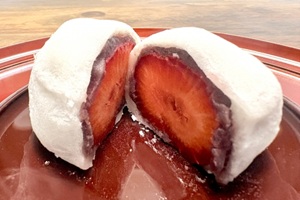
Ichigo Daifuku
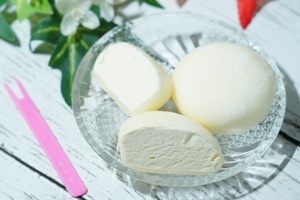
Mochi ice cream
Bread in Japan
Bread was introduced from Portugal in the 16th century.
So it is called as "pan" in Japanese, from pronunciation in Portuguese.
But popularization of bread was after the end of the 19th century, and it is not so old in Japan.
Today, many people in Japan eat bread for breakfast or lunch instead of rice.
Bread is, after all, a substitute for rice.
Many types of bread sold in Japan are adapted and evolved to suit Japanese tastes, and are not found in Europe or America, the home of bread.
You can find some bakeries in any city, and you can get favorite breads at most convenience stores or supermarkets.

A bakery in Japan
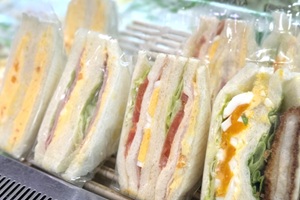
Sandwiches for sale
Recently, not only general bread but also various types of bread are sold.
In Japan, very various fillings are used for bread and sandwich.
Probably, many foreign touists may experience a strange sensation.
For sandwich, hams and lettuce, oiled tuna flakes, boiled eggs with mayonnaise, etc. are the popular fillings.
In particular, the sandwich made with soft bread and a filling of hard-boiled eggs mixed with mayonnaise known as "Tamago sando" in Japanese has become hugely popular among foreign tourists.
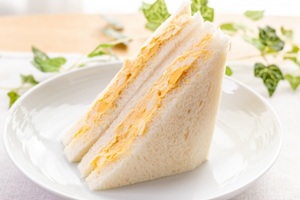
Tamago sando (Egg sandwich)
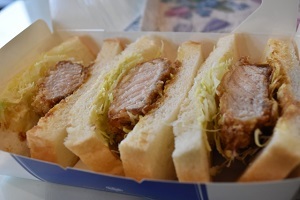
Sandwich of tonkatsu
And tonkatsu (Japanese pork cutlet), yakisoba (fried Chinese noodle) are known for foreigner as unique Japanese fillings.
Curry bread with thickened curry inside is mainly fried in oil.
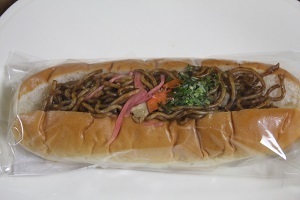
Sandwiches of yakisoba

Curry bread
Breads and sandwiches like confectionery are also popular in Japan.
"Melon-pan" (Melon bread) is popular as a unique Japanese bread.
It is sweet and has a flavor of melon.
An (sweet red bean paste), strawberry jam, custard cream, etc. have been the popular fillings for bread since early 20th century.
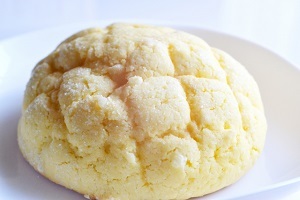
Melon-pan
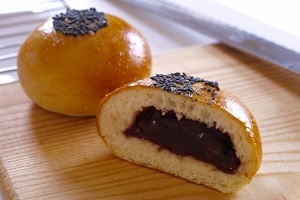
An-pan (An bread)
The above breads are the most conspicuous types of bread found in bakeries.
The bread that Japanese people eat with their meals is Shokupan.
It is the most basic type of bread, baked in a large rectangular, box-shaped pan.
Overseas, this type of bread is known as "white bread".
Japanese Shokupan is characterized by its surprisingly soft, chewy texture and subtle sweetness.
Western tourists are said to be impressed by the deliciousness of Japanese Shokupan.
Japanese people eat sliced Shokupan toasted in a toaster, with butter spread on it or topped with various ingredients.
Of course, Shokupan is essential for making sandwiches.
Recently, fruit sandwiches are extremely popular among foreign tourists.
It is a sandwich made with slices Shokupan, filled with whipped cream and seasonal fruits.
It is known for its "artistic cross-section".
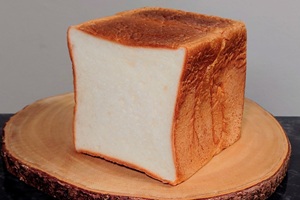
Shokupan
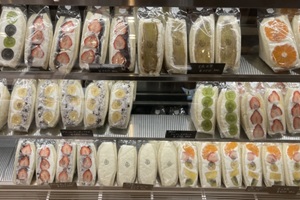
Fruit sandwiches in a bakery