
Ramen
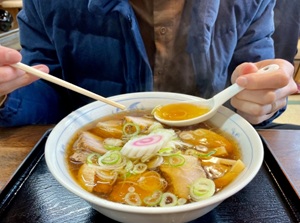
Eating Ramen
Ramen is a noodle dish using Chinese noodle.
The soup for the ramen is poured into a bowl, and the boiled Chinese noodles are placed inside.
Several toppings are placed on top.
Customers eat the noodles using chopsticks.
Sometimes a spoon is provided for eating the soup.
In 1910, a restaurant in Asakusa, Tokyo, invited a Chinese chef.
He created a dish using "shoyu" (Japanese soy sauce) in a Chinese noodle dish.
The dish was called "Shina-soba" (Soba in China).
This is the first ramen ever made in Japan.
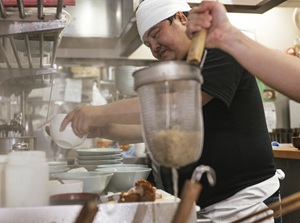
Ramen Chefs at Work
After World War II, "Shina-soba" rapidly developed throughout Japan as an inexpensive and delicious food.
And, the Chinese word "lamian," meaning the noodle dish, was pronounced "ramen" in Japanese, and this came to be used as the name for noodle dishes.
Ramen has now become a national dish unique to Japan.
And each ramen restaurant competes by offering its own unique ramen flavor.
Three elements of ramen
Noodle
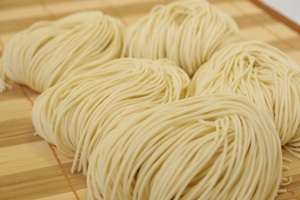
Chinese noodle for ramen
Ramen noodles are made from wheat flour like Udon and Italian pasta.
But, because "kansui" (alkaline water) is used when making noodles, the noodles are yellow in color.
From thick to thin noodles, noodles are made to the thickness requested by restaurant chefs.
Additionally, there are differences in noodle shape, such as straight noodles and curly noodles.
Soup
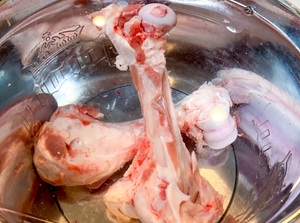
Chicken bones for ramen soup
The soup is the most important element that determines the taste of ramen.
Broadly speaking, there are two main methods.
The basic method is to make broth by simmering various ingredients.
Based on chicken bones, pork bones, beef bones, dried bonito flakes, kelp, dried shiitake mushrooms, and other ingredients used to make Japanese dashi are simmered together in a large pot of water for a long time.
The slightly clear broth that is then strained is used as the base for the soup.
Generally, customers can choose from three flavor options: Shoyu (soy sauce), Miso, and Shio (salt).
"Shoyu" is a mixture of broth and soy sauce.
"Miso" is a mixture of broth and miso.
"Shio" is made by mixing broth with salt and several other seasonings.
Another method is called "tonkotsu," which means pig bone.
This method was discovered by chance by a ramen chef in Kyushu island, and many ramen shops in Kyushu use this soup base.
Various pork bones are boiled over high heat for a long time in water until they dissolve.
The finished broth is white, creamy, and very rich.
Soy sauce and mirin are added to this broth to complete the soup.
Toppings
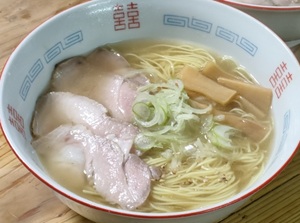
Ramen topped with Chashu, Menma and Green onion
The most common ramen toppings are as follows.
- Chāshū : Sliced barbecued pork
- Menma : Salt-cured and fermented bamboo shoots
- Chopped green onions
Additionally, the following may be added as toppings.
- Boiled egg
- Dried sheet of nori (seaweed)
- Naruto, Kamaboko : Sliced fish paste products
Furthermore, some regional specialty ramen dishes feature different toppings to create their unique characteristics.
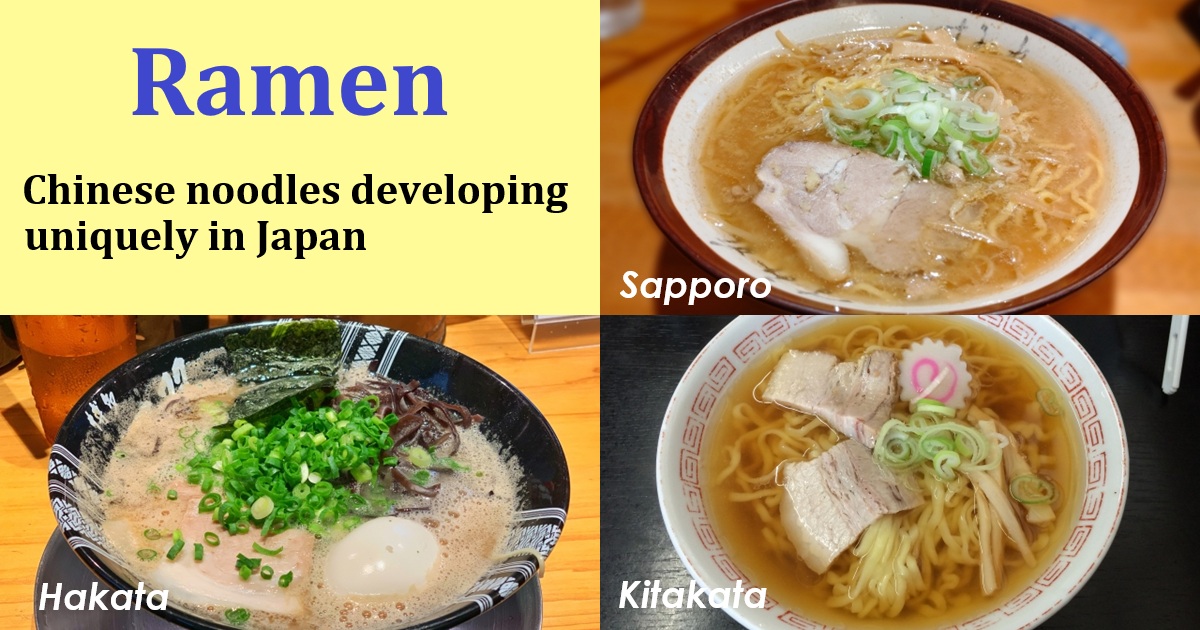
The Three Major Local Ramens of Japan
Ramen has its own unique style, depending on the local climate and ingredients.
In particular, the ramen from the following three cities has become nationally popular and even has its own brand name.
Sapporo Ramen
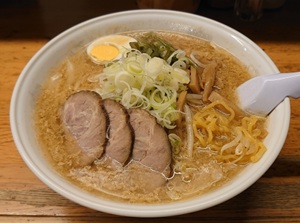
Sapporo is the central major city of Hokkaido.
Originally, there were many ramen shops in Sapporo.
In the 1950s, a ramen chef developed a miso-based ramen that was well-suited to the cold climate, and it quickly became famous.
Medium-thick, curly noodles are used.
The soup used is a rich and flavorful broth made from pork bones and other ingredients, seasoned with miso and garlic.
In colder regions, lard is often floated on top of the soup to prevent the ramen from cooling down.
The standard toppings are stir-fried vegetables such as onions, cabbage, and bean sprouts.
Corn and butter are sometimes used as toppings.
Kitakata Ramen
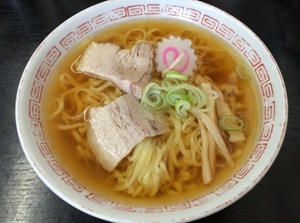
Kitakata is a small city located in a basin in the western part of Fukushima Prefecture in the Tohoku region.
This city has long been home to many ramen shops.
In the 1970s, it became a tourist destination known for its old storehouses, so it led to the ramen becoming famous.
Kitakata ramen is a very standard style of ramen.
Soft, slightly curly, thick noodles are used.
The clear broth is made from pork bones and dried sardines, and it is seasoned with Shoyu (soy sauce) to create a light soup.
Only very standard toppings are used.
Hakata Ramen
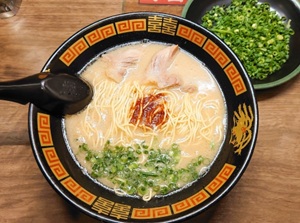
Hakata is the most traditional district of Fukuoka city, the center of Kyushu.
The most distinctive feature of Hakata ramen is its soup known as "Tonkotsu,".
It is made by simmering pork bones until they become tender.
It is believed that the first ramen with that soup was served by a ramen stall in Hakata in the 1940s.
The noodles are extremely thin, straight, and slightly whitish.
The toppings are very simple.
Green onions and Chashu are main.
Sometimes, "wood ear mushrooms" (thin, black mushrooms) or "beni-shoga" (red pickled ginger) are used as toppings.
Hakata ramen has an eating option called "Kaedama".
After you finish the ramen noodles, you can add extra noodles to the remaining soup and enjoy a second bowl.
Popular local ramens
Besides the three major ramen varieties mentioned above, there are many other ramen dishes that are popular in regional cities.
These are basically ramens you can only eat if you go to the cities.
Hokkaido island
Asahikawa Ramen
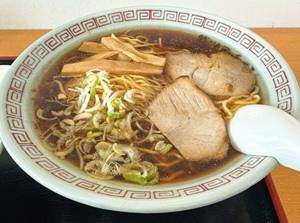
Asahikawa is a city located about 110 km northeast of Sapporo, and is located almost in the center of the island of Hokkaido.
The winters are even colder than in Sapporo.
For Asahikawa ramen, curly noodles are used.
The soup is characterized by a broth made from a combination of seafood, pork bones, and chicken bones.
While Shoyu (soy sauce) is typically added to the broth, adding miso is also becoming more common.
And, one of the characteristics of Asahikawa ramen is the generous amount of lard added to the soup.
Hakodate Ramen
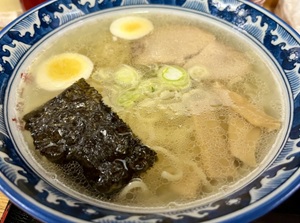
Hakodate is the southernmost city in Hokkaido and one of Hokkaido's land gateways, facing Honshu island across the Tsugaru Strait.
For Hakodate ramen, medium-thin straight noodles are used.
It features a clear soup made with a base of pork and chicken bones, combined with seafood broth such as kelp and scallops.
This is then seasoned with salt and a little seasoning, resulting in a very light soup.
Eastern part of Honshu island
Sano Ramen (Tochigi Pref. in Kanto region)
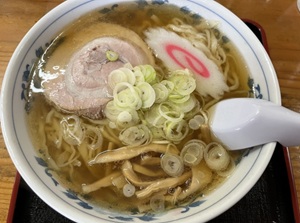
Sano is a city in Tochigi Prefecture located about 70 km north of Tokyo.
It is located at the northern edge of the vast Kanto Plain, and it is a land rich in delicious spring water from the mountains.
The noodles are made using the water and a method of stretching the kneaded wheat dough with bamboo.
The noodles are firm but have a delightfully chewy texture.
The soup is made by simmering chicken bones and pork bones, along with vegetables, resulting in a clear broth.
Yokohama Iekei Ramen (Yokohama city in Kanto region)
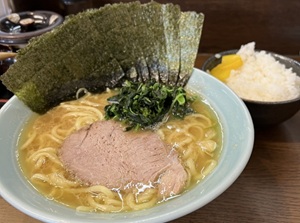
Yokohama is a port city located south of Tokyo, with a population of 3.7 million, and is a huge commuter town for Tokyo.
Yoshimura-ya, a ramen shop that opened in the 1970s, became popular, and gradually the owner took on apprentices and helped them open their own shops, increasing the number of ramen shops of the same style, mainly in Yokohama.
The "ya" at the end of the shop name means house or family in Japanese, and many of the apprentices' shop names include this "ya".
These are collectively referred to as "iekei" in Japanese.
Medium-thick straight noodles are used.
The soup is a Shoyu-based pork bone broth made primarily from pork and chicken bones.
The toppings are typically Chashu, Nori (seaweed), and spinach.
Central part of Honshu island
Niigata Thick Miso Ramen (Niigata Pref. in Koshinetsu region)
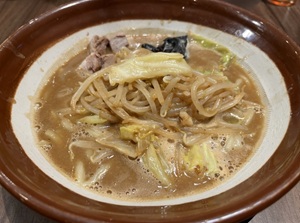
Niigata Prefecture is located north of Tokyo and on the Sea of Japan coast.
Many cities and towns within the prefecture offer unique ramen dishes.
Niigata Thick Miso Ramen is one of the popular ramens in Niigata city.
In Japanese, it is called "Niigata Noukou Miso Ramen".
Thick noodles with a firm, chewy texture are used.
This ramen features a rich, salty soup made with a pork bone broth and plenty of Niigata miso.
Because it's very rich, diners can dilute the soup to their liking with the broth provided separately.
The toppings are cabbage and bean sprouts stir-fried in lard.
The sweetness and moisture released from the vegetables are added to the rich soup.
Toyama Black Ramen (Toyama Pref. in Hokuriku region)
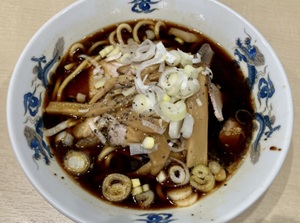
Toyama is the central city of Toyama Prefecture and it is located about 50 km east of the ancient city of Kanazawa.
Toyama Black Ramen was created in 1947 by a chef as a way to replenish the salt levels of factory workers and craftsmen who worked up a sweat.
Thick, firm noodles are used.
The soup has a high concentration of soy sauce, and is topped with a large amount of coarsely ground black pepper.
The soup is almost black in color.
Takayama Ramen (Gifu Pref. in Tokai region)
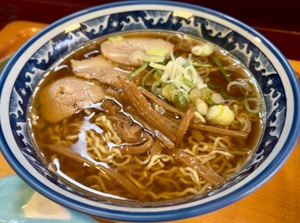
Takayama is a city located in the mountainous area of northern Gifu Prefecture where old townscapes remain.
Takayama ramen has been enjoyed since the 1930s, and there are many ramen shops in the town.
Extremely thin, curly noodles are used.
When making broth using chicken bones or seafood as a base, soy sauce is also mixed in and used as is for the soup.
The basic toppings are just Chashu, menma and green onions.
Sometimes a boiled egg or seaweed is added.
Western part of Honshu island
Wakayama Ramen (Wakayama Pref. in Kansai region)
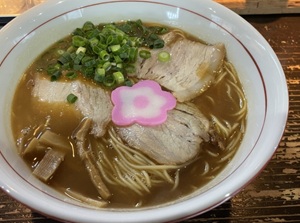
Wakayama city is located about 60 km southwest of Osaka.
Wakayama ramen became widely known throughout Japan after being featured on a television program in 1998.
Thin, straight noodles are used.
There are two completely different types of soup depending on the restaurant.
One is a clear soup with a pork bone base and a prominent soy sauce flavor.
Another type is the "Tonkotsu" soup, which is made by simmering pork bones for a long time.
The toppings are the basic ingredients of Chashu, Menma, and green onions, and a piece of "Kamaboko" which is a processed food made from minced fish is added.
Onomichi Ramen (Hiroshima Pref. in Chugoku region)
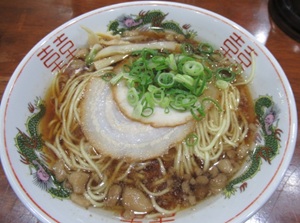
Onomichi is a charming city facing the Seto Inland Sea, with old townscapes remaining on its slopes.
Onomichi ramen has been enjoyed in this town for a long time.
The standard noodles are medium-thin and straight, characterized by their smooth texture and firm bite.
The soup is a Shoyu-based broth made with chicken and pork bones, blended with a stock made from the seafood in Seto Inland Sea such as dried sardines and sea bream.
Shikoku, Kyushu islands
Tokushima Ramen (Tokushima Pref. in Shikoku region)
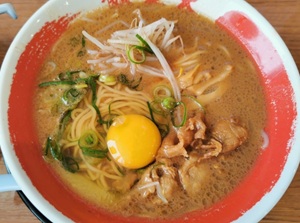
Tokushima city is a city located on the eastern coast of Shikoku island.
The Awa Odori dance festival, held on a grand scale in the summer, is famous.
There was a ham factory in Tokushima, so the chefs were able to obtain large quantities of pork bones cheaply.
That led to the development of Tonkotsu-based Tokushima ramen.
Medium-thin to medium-thick straight noodles are used.
The topping is very unique.
Pork belly simmered in a sweet and savory sauce is made with soy sauce and sugar.
It is similar to "Sukiyaki".
A raw egg, a staple of sukiyaki, is also added as a topping.
Kumamoto Ramen (Kumamoto Pref. in Kyushu region)
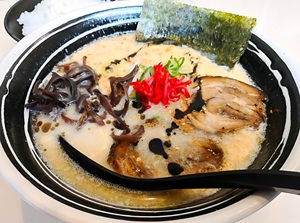
Kumamoto is a city located on the western coast of Kyushu island, about 100 km south of Fukuoka city.
In the 1950s, a Hakata ramen shop from Fukuoka expanded into Kumamoto.
After that, the chefs in Kumamoto created their own versions adding their own unique flavor touches.
Unlike the thin noodles of Hakata ramen, medium-thick, straight noodles are used for Kumamoto ramen.
The soup is made with pork bones and chicken bones, so it is a milder flavor than Hakata ramen.
A black oil made by burning garlic and vegetables is poured over the surface of the soup.
The basic toppings include Chashu, green onions, and Nori (seaweed), but "wood ear mushrooms" are also an essential ingredient.
Other dishes using Chinese noodles
Hiyashi-Chuka
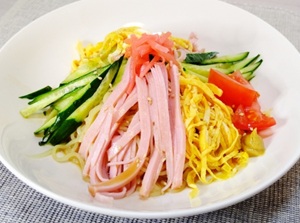
"Hiyashi" means "cold", and "Chuka" means "Chinese".
Hiyashi-chuka is the cold dish using Chinese noodle.
It is made by cooling the boiled Chinese noodle in water.
It is served on a plate, and a sauce made from vinegar, soy sauce, sugar, and sesame oil is poured over it.
Chopped cucumber, sliced tomato, chopped fried egg, shredded ham and other ingredients are topped.
It looks just like a Chinese salad.
This is usually a summer-only menu item, and you can find it at regular restaurants and ramen shops.
Yakisoba
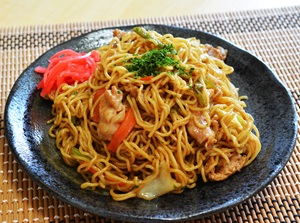
Yakisoba means fried soba.
But it is used not Japanese soba but Chinese noodle.
It is made by frying Chinese noodle on a hot plate and seasoning it with Worcestershire sauce.
Along with the Chinese noodles, sliced pork and vegetables such as cabbage, carrots, onions, and bean sprouts are also fried together.
The finished yakisoba is served on a plate.
Red pickled ginger is served on the side.
Depending on your preference, you can sprinkle it with dried seaweed powder before eating.
We can't find this menu at most restaurants.
Rather, it is made at home.
It is sold in supermarket and convenience store.
And, we can also find some stands at main festival of temple or shrine.
Yakisoba is like a snack dish.
This is cooked on a hot plate, so it is often found on the menus of restaurants that serve Okonomiyaki and Takoyaki.
Among the stalls that line the streets during temple and shrine festivals, there are always ones that sell yakisoba.