
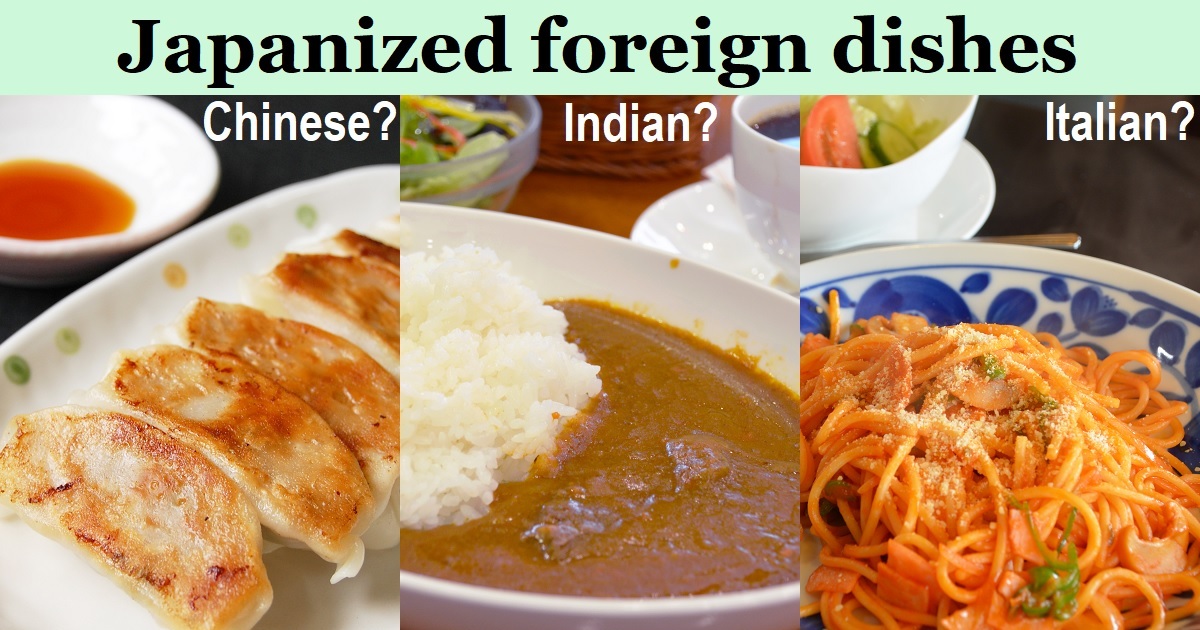
Japanized foreign dishes (Gyoza, Curry, Yakiniku)
Popular Japanized Chinese dishes
Gyoza
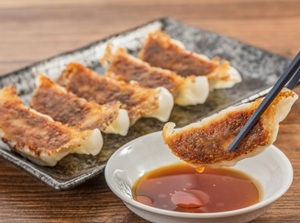
Gyoza (餃子) is a food around northern China, and is called "Jiaozi" in Chinese.
(In Japanese, "o" in the word is pronounced long, so it is read as "Gyōza".)
Gyoza had been known as a Chinese dish since the 17th century, but current Japanese-style Gyoza was made in the 20th century.
It is a food that a lump of minced pork and chopped vegetables (mainly cabbage, garlic chives, garlic) is wrapped with a thin dough.
In Japan, Gyoza is mainly fried on a pan.
And we eat after dipping it in the sauce mixed shoyu, vinegar and hot sesame oil.
Commonly, it is a side dish of ramen or rice.
In China, gyoza is mainly one of staple foods, and it is eaten after boiling in hot water.
And, garlic is not used.
Therefore, Japanese Gyoza is quite different food from Chinese Jiaozi.
Japanese Gyoza can be enjoyed as a side dish at Chinese restaurants and ramen shops.
Many izakaya chains also offer gyoza on their menus.
Generally, one serving consists of five to six pieces of gyoza.
Local Gyoza
There are the cities in Japan which have high gyoza consumption and promote the dish as a local specialty.
Utsunomiya Gyoza
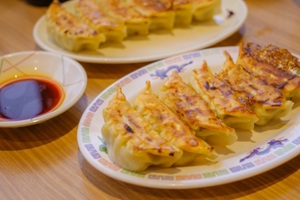
Utsunomiya is the city in Tochigi Prefecture and is located about 90 km north of Tokyo.
Utsunomiya gyoza features an abundance of vegetables such as cabbage, Chinese cabbage and garlic chives, but the amount of minced pork is relatively modest.
Hamamatsu Gyoza
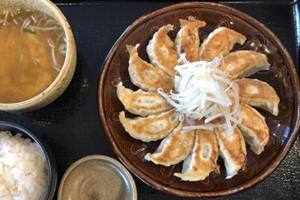
Hamamatsu is the city in Shizuoka Prefecture and is located about 200 km southwest of Tokyo.
Cabbage and onion are used as the vegetables in Hamamatsu gyoza.
Another characteristic of Hamamatsu gyoza is that many pieced of gyoza are arranged in a circle and pan-fried, then served on a plate just as they are.
Chahan
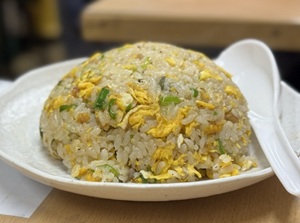
Chahan (炒飯) is Chinese fried rice, and is called "Chaofan" in Chinese.
(In Japanese, the first "a" in the word is pronounced long, so it is read as "Chāhan".)
"Chao" means "frying in pan" and "fan" means "rice" in Chinese language.
Boiled Rice is fried in oil with some other ingredients such as scrambled egg, chopped green onion, pork, shrimp, etc.
It is seasoned by salt, chicken bone soup, shoyu, etc.
In China, Chaofan is basically a home cooking, and is not served in the restaurant.
And the ingredients are not different from Japanese Chahan.
In Japan, Chahan is one of the menu of Chinese cuisine.
And, chahan is often served with Ramen and Gyoza as a set menu of popular Chinese restaurants and ramen shops.
Chahan is a method to eat rice deliciously for Japanese people.
So, it is sometimes made at home.
Japanese Chahan can be enjoyed as a dish at Chinese restaurants.
And many ramen shops offer a set menu featuring Ramen and Chahan.
In the restaurants, the chef cooks using only a large ladle and uses the ladle to plate the food in a single motion.
So, the served Chahan is shaped into a neat hemisphere.
Tenshinhan
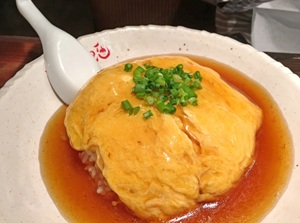
"Tenshin" means Tianjin which is a large port city in northern China, near Beijing.
"Han" means "rice" in Chinese language.
Tenshin-han (天津飯) is a dish that Chinese omelette with crab meat is put on rice and sour-sweet sauce is poured on it.
The style is in a category of Donburi dish (Rice bowl topped with cooked food).
But the Chinese omelette is one of Cantonese cuisine in the southern China, and there isn't a dish of the omelette on rice in the area.
During the food shortage era after World War II, a Japanese cook in Tokyo or Osaka made such dish with using ingredients from Tianjin.
It is said that the misterious name was given for the only reason.
Of course, we cannot find such dish in Tianjin city in China, and Chinese people don't know the dish.
Tenshinhan can also be enjoyed at Chinese restaurants in Japan.
Popular Japanized Korean dish
Yakiniku
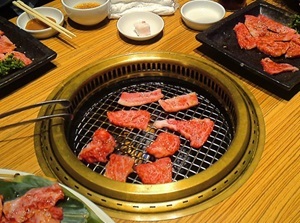
Yakiniku means "grilled meat" in Japanese.
A smokeless roaster is set up on the table at the yakiniku restaurant.
The customers place the sliced meats and vegetables on the roaster themselves to grill them.
They eat the grilled foods with any sauce.
The style of cooking was started by Korean restaurants in Japan around 1946, after the end of WW2.
At that time, cheap edible internal organs of pig and cattle were marinated in a sauce and were grilled.
After that, pork, chicken, beef have been added as the ingredients, and vegitables have also been added.
Especially, beef became the popular ingredient in accordance with economic progress, and we can eat the various parts of beef.
In original Korean-style, marinated pork is the main ingredient, and large part of meat is grillled.
Kimchi, leaf vegitables, etc. are provided, and meats are eaten with them.
The restaurant staff carves it with scissors, and serves them to the guests.
In Japanese-style, various ingredients are served on the dishes and the guests themselves grill them on a grill.
And, they eat the cooked foods with any sauce.
Each Yakiniku restaurant provides various menus and styles.
Popular Japanized western-style dishes
Curry rice
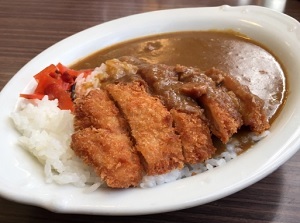
Katsu-curry
Curry rice is the name in Japanese.
In English, it is called "curried rice" or "curry and rice".
Curry rice is one of the favorite dishes of most Japanese people, and it is often made at home.
So, Japanese people almost always simply call this dish "Curry".
Originally curry is an Indian dish.
Because Englishmen brought this from colonial India into Japan in the late 19th century, Japanese people believed that curry was a Western dish.
After that, Japanese Navy invented the cooking to put curry on rice as a smart dish in 1873.
White rice is served on a plate, and a curry sauce made by stewing meat and vegetables (onion, carrot, potato) with curry spices—is poured over it.
As the meat, beef, pork and chicken are used.
And prawn or shrimp is sometimes used.
Of course, there is also "vegetable curry" without meat.
We eat with a spoon, mixing the rice and curry.
Generally fukujin-zuke or rakkyo is served as a pickle.
Curry rice is often made at home.
And, many various restaurants serve the dish with curry.
We can find not only curry rice but also udon and soba of curry, and there is even a bread stuffed with curry.
As a variety of curry rice, there is the dish that a Tonkatsu (Japanese pork cutlet) is topped on the curry rice. (The name is "Katsu-curry".)
You can enjoy curry at a wide range of places, including fast-food restaurants, family restaurants, specialty chains, diners, and cafés.
The main chains of curry rice are the following.
Hayashi rice
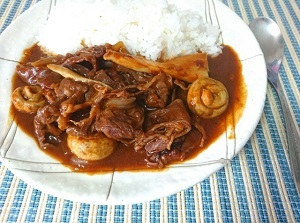
Hayashi rice is also popular dish, and it is the dish that the roux is put on the rice like curry rice.
Generally, the roux is made by stewing fried beef and onion in a thick demiglace sauce mixed red wine and tomato sauce.
The roux is similar to "hashed beef".
It is said that the Japanese name "hayashi" came from "hashed".
Because beef is not cheap and the roux is a little gorgeous, Hayashi rice is mainly served at Western style restaurant.
Omurice
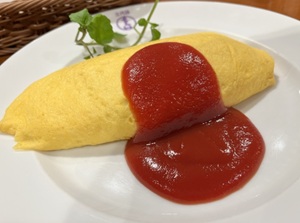
Omurice is a dish that cooked rice is wrapped in an omelet made from eggs.
"Omu" is the first part of the word "omelet" and it is connected with the word "rice".
This is a dish devised by a Japanese chef in the early 20th century, and it was named "Omurice."
First, boiled rice is fried with chopped chicken, onion and other some vegetables.
And it is seasoned with ketchup.
Next, above rice is wrapped in a thin sheet of fried egg like omelette.
It takes some skill to neatly wrap the rice in this sheet of egg.
Generally, it is served with putting ketchup or demiglace sauce on it.
Omurice is also served at Western style restaurant.
Neapolitan
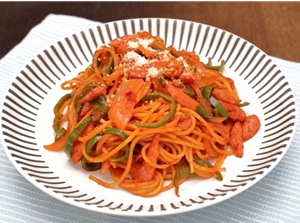
Neapolitan is made by frying boiled spaghetti, sliced onion and green pepper with ketchup.
Usually sliced Vienna sausage or ham is added.
Originally, this is invented for army of occupation after the World War II, and "Spaghetti Neapolitan" was named by a Japanese chef of a hotel in Yokohama around 1946.
After this, this "Neapolitan" has been popular in Japan.
Of course, the dish like this does not exist in Italy, the home of spaghetti, nor even in Naples.
There are many orthodox spaghetti restaurants in Japan.
But it is a little difficult to find "Neapolitan" at such restaurant.
You can eat this at most cafes, family restaurants or cheap restaurants.