
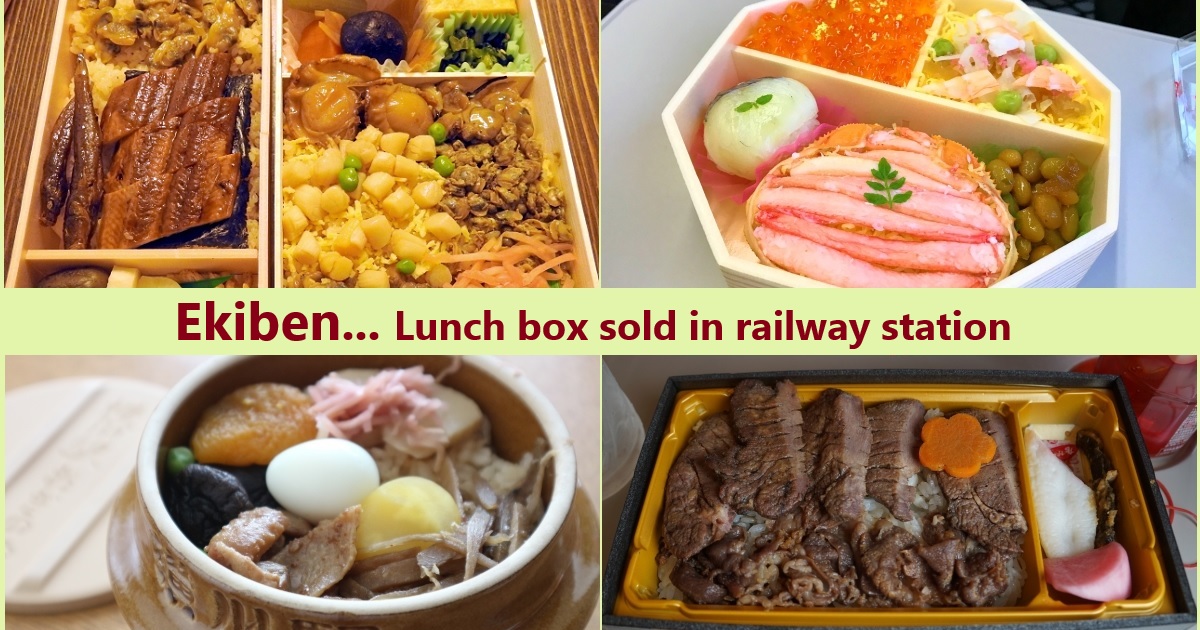
Bento (Boxed meal), Ekiben
About Bento About Ekiben Standard type of Ekiben Popular Local Ekibens
Bento is a portable lunch
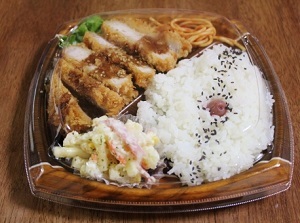
Tonkatsu bento of Convenient store
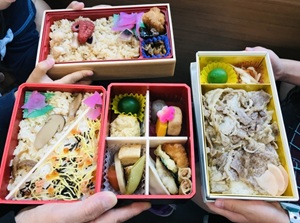
Various Ekibens
When you travel around Japan, Bento is a very convenient meal.
Bento means a portable meal in a box.
In Japanese, the last vowel "o" in the word is pronounced long, so it is read as "bentō".
The polite expression of "bentō" is "obentō".
As a Japanese lunch, rice and some side dishes are packed together in a box.
Rice is the staple food in Japan, and is eaten after boiling with water.
But cold rice is also tasty.
"Onigiri" is a rice ball.
It is ideal for taking out and eating on the go.
In this sense, "sushi" is often sold as a bento.
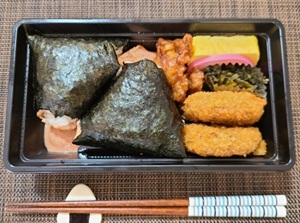
Onigiri bento
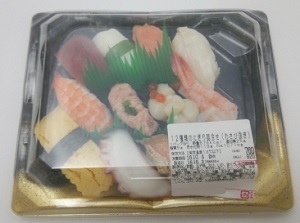
Sushi bento
Many of the people who are in their working place or their school at lunch time bring homemade bento.
Because the bento is made in early morning, it becomes cold at lunch time.
But it is tasty.
Various bento for lunch are sold in the town around lunch time, and many people buy them as the lunch.
(The other people have lunch in their home or in any restaurant.)
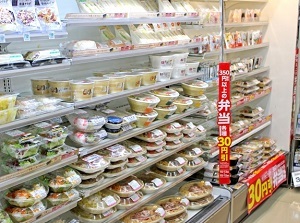
Bentos in Convenient store
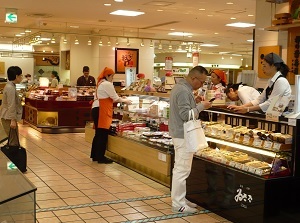
Depachika
If you want to get bento around town during your trip, you can choose from a wide variety of options at the following places.
- Convenient store : There are shelfs for Bento in all shop.
- Supermarket : There is the section of takeout foods.
- Depachika : It means basement of a department store in Japanese.
Most department stores have the section of takeout foods in the basement floor.
Of course, bento is also the most useful lunch for tourist.
Especially, Ekiben has been made for the tourists.
Ekiben is Bento sold at railway stations
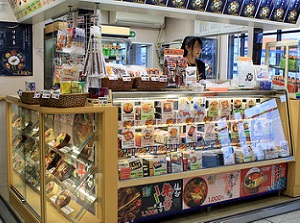
Ekiben stand, Photo Bentos here! by Ris@i_hate_u
Ekiben is a box lunch sold at railway stations.
“Eki” means railway station and “ben” is the first syllabic character of “bento”.
There are currently no dining cars on trains in Japan.
So, it is generally acceptable to have a light meal at your seat on Shinkansen and limited express trains.
Ekiben are boxed lunches designed for passengers on the long-distance.
The box is about the size of a tablet computer.
Disposable chopsticks are included.
Sometimes, a paper towel for wiping your hands is also provided.
Ekiben are sold only at major stations where limited express trains stop.
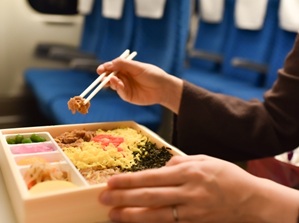
Eating Ekiben in a train
If you are going to be on the train during mealtime, buying an Ekiben to take with you is a good option.
Shinkansen and limited express trains have fold-down tables on the back of the seats.
So, you can eat ekiben an ekiben by using the seat table.
However, it is proper etiquette to eat quietly so as not to disturb other passengers.
Standard type of Ekiben
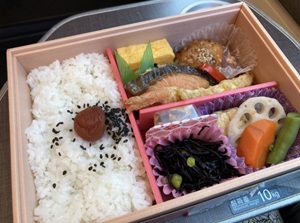
Makunouchi bento
Various ekiben are sold in Japan.
There is a standard type of Ekiben, and it is called as Makunouchi bento.
Boiled rice is packed in the half part of a lunch box.
There is usually a red "umeboshi" on top of the rice.
Umeboshi is a Japanese pickled plum made by curing ume fruits in salt, so it is very salty and sour.
Various small-sized side dishes are packed in the other part.
As the side dish, broiled fish, Japanese omelette and Kamaboko (fish cake) are indispensable.
In a sense, Makunouchi bento may be the essence of Japanese home cuisine.
When you visit Japan, you may feel Japanese taste by ekiben.
Popular local Ekibens
We can buy above type of ekiben easily because it is the basic bento.
But there are many special ekibens throughout Japan.
These are the ekiben taking advantage of the characteristics of each region.
Probably, you can find such special ekibens in many bento stands.
Such ekiben have been loved by travelers for a long time and have become local specialties.
The ekibens introduced below are among the most popular ones.
Hokkaido region
Ika-meshi (Mori station)
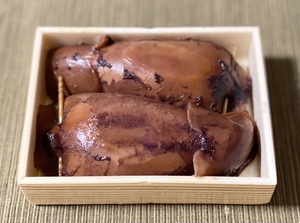
Ika-meshi means squid and rice.
A squid tube stuffed with rice is cooked in a sweet and savory soy sauce broth.
It doesn't come with chopsticks, and you are supposed to bite right into it.
This is sold at Mori station located about 50 km north of Hakodate city.
JR Limited express between Hakodate and Sapporo stops at Mori.
Souvenir versions are also available at shops in Sapporo and New Chitose Airport.
Tohoku region
Tori-meshi (Odate station)
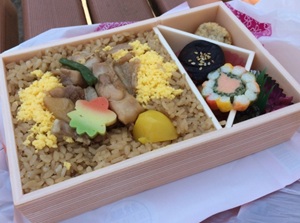
Tori-meshi means chicken and rice.
The rice is cooked in chicken broth, and sweet and savory shredded or sliced chicken are topped on it.
It uses Hinai-jidori, a delicious chicken in this area.
It had been sold at Odate station in the northern part of Akita Prefecture since 1947.
Odate station is between Aomori and Akita stations on JR Ouu Line, and JR Limited express stops there.
Amiyaki Gyutan Bento (Sendai station)
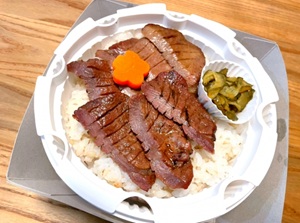
Amiyaki means "grilling on wire net", and Gyutan means "beef tongue".
As the name suggests, the ekiben consists of grilled beef tongue placed on top of barley rice.
Especially, it is famous for heating up hot and fresh just by pulling a string on the container.
Beef tongue is widely known across Japan as a famous specialty of Sendai city.
Sendai is the central city of the Tohoku region, and the Shinkansen also stops there.
You can buy this ekiben at Sendai station.
Gyuniku Domannaka (Yonezawa station)
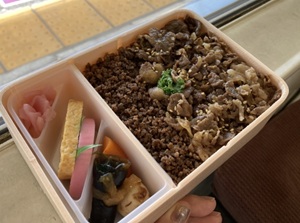
"Gyuniku" means "beef", and Yonezawa city in Yamagata Prefecture is home to some of the most delicious Wagyu beef.
And "Domannaka" is a variety of rice grown in Yamagata Prefecture.
Sliced beef and minced beef are cooked with soy sauce and sugar, and they are topped on boiled Domannaka rice.
The manufacturer of the ekiben is located in Yonezawa City.
It is sold at Yonezawa station and main stations in Yamagata Prefecture.
Kanto region
Chicken Bento (Tokyo station)
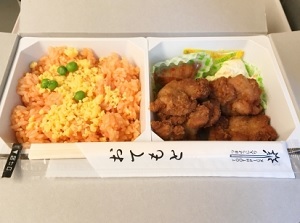
Ketchup fried rice with chicken is in one tray, and some pieces of deep-fried chicken are on the other.
Among the various Ekiben sold at Tokyo Station, the heart of Japan, this is a true long-seller.
It is well known that Emperor Heisei (reigned from 1989 to 2019) also loved this.
Shiumai Bento (Yokohama city)
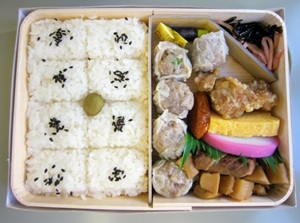
"Shiumai" is steamed pork dumpling and is a traditional Chinese dim sum dish.
There is a large chinatown near Yokohama Port, but Kiyoken, a Japanese company, began manufacturing and selling shiumai to take home.
And, Kiyoken also released an Ekiben featuring shumai.
It is a standard Makunouchi bento featuring a few pieces of shumai.
You can easily buy it because there are many stores of Kiyoken in the stations around Tokyo and Yokohama.
Touge no Kamameshi (Yokokawa station)
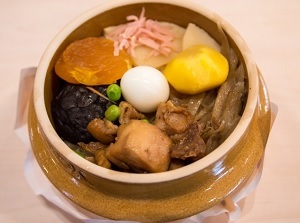
Kamameshi is one of the traditional Japanese rice dishes.
Various ingredients are topped on the rice, and these are boiled in a small ceramic pot.
Yokokawa Station is located at the foot of a steep mountain, and all trains stopped there to attach helper locomotives for the mountain pass.
For the passenger, this ekiben of Kamameshi was the perfect lunch at that time.
"Touge" means "mountain pass".
Shinkansen was opened in 1997, and Yokokawa became a mere terminal station of the local line.
Now, the popular ekiben is sold at Takasaki, Karuizawa, Annaka-Haruna stations of Shinkansen.
Hokuriku region
Masu no Sushi (Toyama Prefecture)
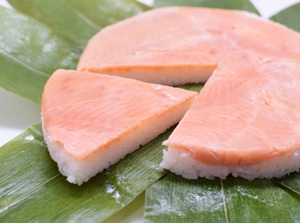
"Masu no Sushi" means "trout sushi".
This is one of the local dishes of Toyama Prefecture.
It is made by pressing vinegar-seasoned sushi rice and cured trout inside a round wooden container, which is wrapped in bamboo leaves to add fragrance.
You have to cut this round sushi like a pizza, so it's a bit hard to eat it as Ekiben on the train.
It's better to take it to go and eat at your hotel.
Echizen Kani-meshi (Fukui station)
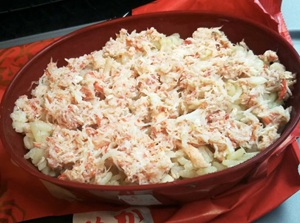
Rice is boiled with snow crab meat and paste, and a generous amount of flaked crab meat is topped.
It is in a red crab-shaped plastic container.
Fukui Prefecture is one of the famous production areas for snow crabs.
You can buy this ekiben at Fukui Station and other major stations in the prefecture.
Kansai region
Kakinoha-zushi (Nara Prefecture)
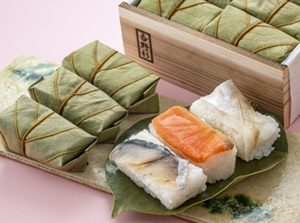
A slice of fish is placed on a bite-sized block of vinegared rice, pressed, and then wrapped in a persimmon leaf.
This is a traditional local dish from Nara Prefecture.
It was cleverly invented as a way to preserve and eat fish in regions that are far from the coast around the 17th century.
Persimmon leaves have natural antibacterial properties.
You can buy this not only in Nara, but also at major stations in the Kansai region, such as Osaka and Kyoto.
Hipparidako-meshi (Kobe, Akashi cities)
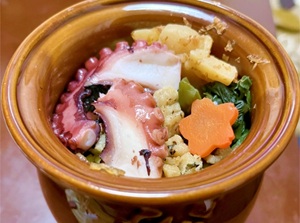
Octopus, conger eel and some vegetables are topped on rice flavored with Japanese stock and soy sauce.
And, it is in a small ceramic jar.
The Akashi Strait, located just west of Kobe, is a famous production area for octopus.
Catching octopuses in sunken ceramic pots is a traditional fishing method.
That is the image of this Ekiben.
You can buy this at Shin-Kobe, Nishi-Akashi and Shin-Osaka stations of Shinkansen.
Chugoku region
Anago-meshi (Miyajima)
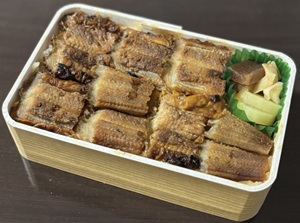
Miyajima is a sacred island famous for the UNESCO World Heritage-listed Itsukushima Shrine.
Anago-meshi is a local specialty of Miyajima consisting of grilled conger eel on top of rice cooked in a broth made from conger eel bones.
There are some restaurants serving this along the shrine's approach.
The ekiben of Anago-meshi is sold at Miyajima-guchi station near Miyajima island and Hiroshima station.
Kyushu region
Kashiwameshi (Fukuoka Prefecture)
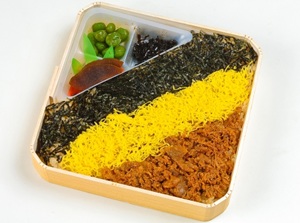
Kashiwameshi is a local specialty in Fukuoka Prefecture.
"Kashiwa" means chicken in the Kyushu dialect.
It is a savory rice dish cooked in a chicken broth, topped with sweet and savory minced chicken and scrambled eggs.
You can buy this at Hakata, Kokura and Tosu stations of Shinkansen.