
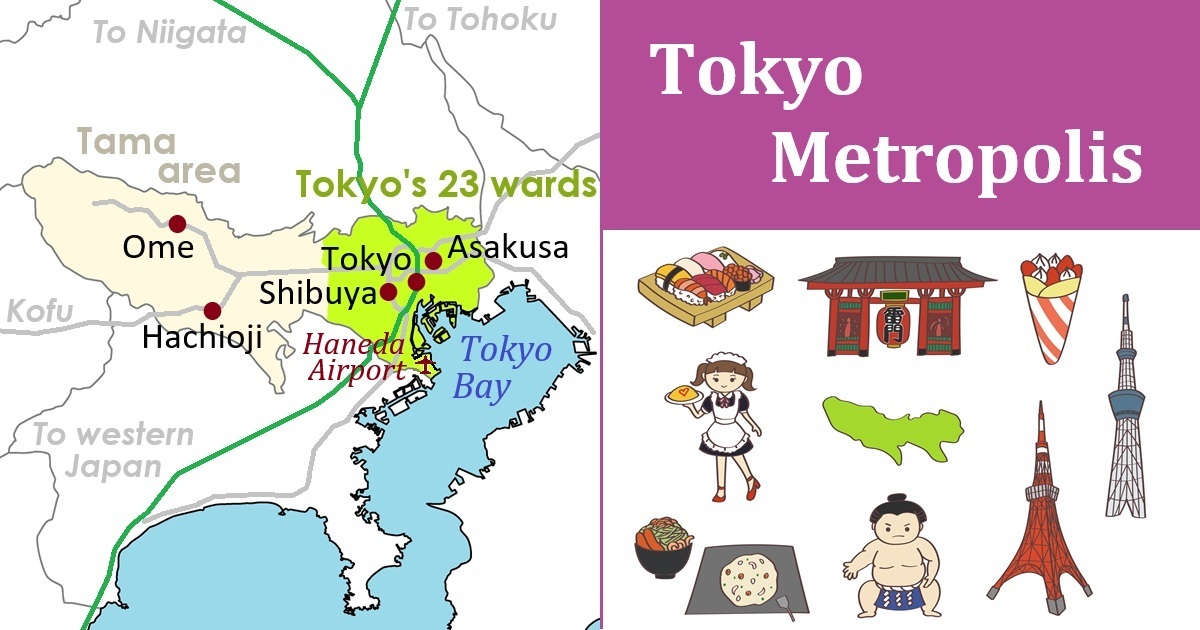
Tokyo Metropolis [東京]
Tourist spots in Tokyo Metropolis
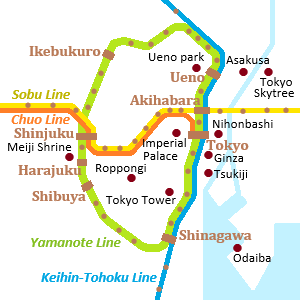
JR Lines in central Tokyo
JR Yamanote Line runs in a loop through the central part of Tokyo.
In addition, JR Chuo Line and Sobu Line run east to west across the center of Yamanote Line.
In addition, many subway lines run like a web under this central area.
The trains run every few minutes on all lines.
So, it is convenient to move around the area.
Please see the next page for the information about railways in Tokyo.
Central part of Tokyo
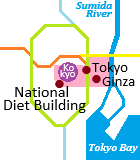
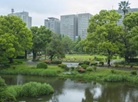
In the heart of Tokyo lies Kōkyo (Imperial Palace), where the Emperor resides.
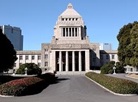
Just to the south, there are the government district such as the Diet Building which is in charge of Japanese politics.
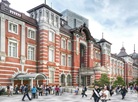
On the east side, there is Tokyo Station which is the starting point of Japan's railways.
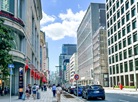
And Ginza and Nihonbashi are busy downtown areas that have been busy for a long time.
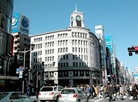
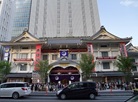
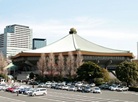
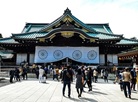
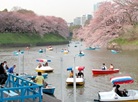
Waterfront area
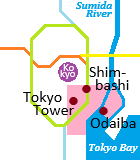
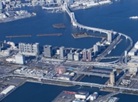
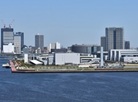
The area just south of central Tokyo is close to the mouth of the Sumida River and Tokyo Bay, and there are many reclaimed lands.
The business district spreads out and there are countless buildings.
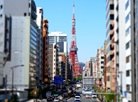
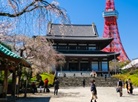
Tokyo Tower stands like a landmark among them.
The business district spreads out and there are countless buildings.
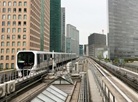
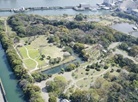
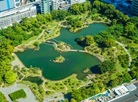
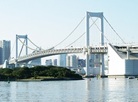
Odaiba area on a vast reclaimed land is an entertainment area where you can see Tokyo on the waterfront.
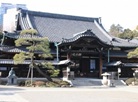
Yamanote area
"Yamanote" refers to an area or residential area on a hill far from the sea.
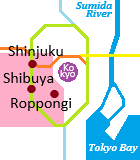
Yamanote in Tokyo is the area from west to southwest of the Imperial Palace, and it is higher than the central area.
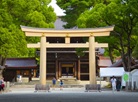
Many foreign embassies are located there, and there is also a residence of the imperial family.
So, Akasaka and Roppongi near the area are a stylish and upscale towns.
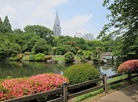
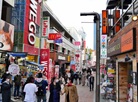
JR Yamanote Loop Line runs around the area, and it connects popular downtown areas such as Shibuya, Harajuku, Shinjuku.
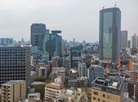
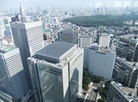
Shinjuku is home to the Tokyo Metropolitan Government Building and there are many skyscrapers.
Shinjuku Station is a railway terminal heading west from Tokyo.
It forms a huge subcenter as the western gateway to Tokyo.
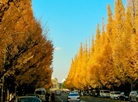
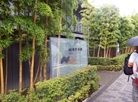
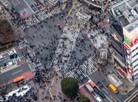
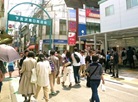
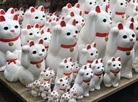
Shitamachi area (West side of Yamanote Line)
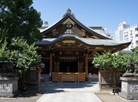
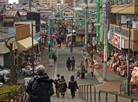
"Shitamachi" is an area where the culture of the common people have developed and where the streets are full of humanity.
In Tokyo, it remains in the area north of the Imperial Palace, and you can feel the traditional atmosphere of Tokyo.
The area just north of central Tokyo is an area with modern culture.
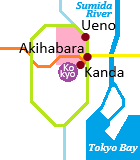
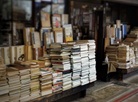
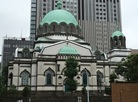
Kanda is a student district with many shops selling used books and musical instruments.
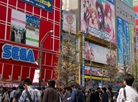
Akihabara developed as an electronics town, but in recent years it has become a source of manga and anime.
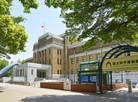
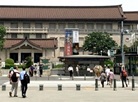
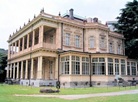
Ueno has been a popular city park for a long time, and there are some Japan's best museums.
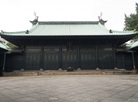
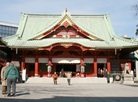
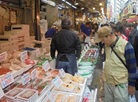
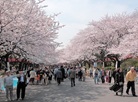

Shitamachi area (East side of Yamanote Line)
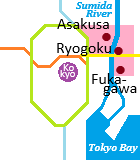
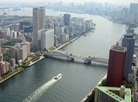
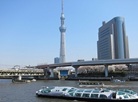
Sumida River flows from north to south on the east side of central Tokyo.
This river was important in the Edo period as a water transportation route from the northern Saitama area.
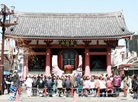
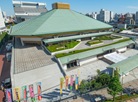
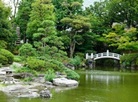
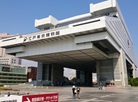
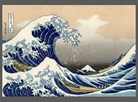
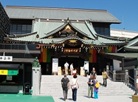
The river is dotted with "Shitamachi" areas such as Asakusa, Ryogoku and Fukagawa.
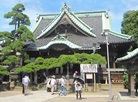
Northwestern area of central Tokyo
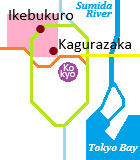
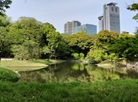
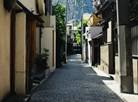
The northwest part of JR Yamanote Loop Line is an educational district with many schools.
It is a quiet area where samurai residences were gathered in the Edo period.
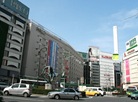
But, Ikebukuro is the terminal station of the railways which goes northwest from Tokyo, and it forms a large downtown.
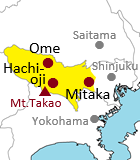
Tama area
The eastern half of the Tama area is a bedroom community adjacent to central Tokyo.
Many small cities are clustered together to form a dense area.
Hachioji City is the central city of the Tama area, and the mountainous area extends to the west.
Izu & Ogasawara Islands
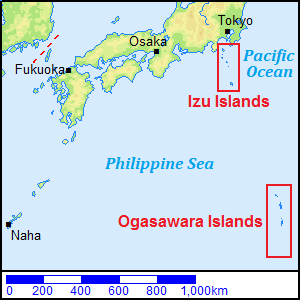
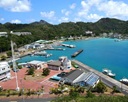
Far to the south of Tokyo, in the Pacific Ocean, a chain of small islands stretches from north to south.
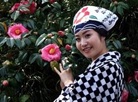
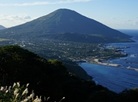
Izu Islands are located 100 to 700 km south of Tokyo, and have about 100 small islands.
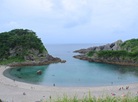
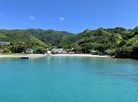
Ogasawara Islands are located 900 to 1,100 km south of Tokyo, and has about 30 islands.
(In English, these islands are called as Bonin Islands.)
These islands are part of Tokyo, and we can only be reached from Tokyo.
These are not resort islands with luxury beach.
Rather, they are the rustic islands with rich nature.
Particularly, Ogasawara Islands have animals and plants with unique evolution.
So it is called "Galapagos of the East".
Izu Islands
Ogasawara Islands
Local foods in Tokyo Metropolis
Edomae-zushi
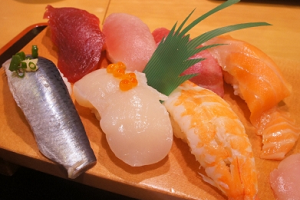
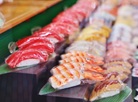
Sushi is one of most popular Japanese foods.
Particularly "Nigiri-zushi" (hand-shaped sushi) and "Norimaki" (sushi roll) originated in Tokyo.
"Edomae" means "the sea in front of Edo (old Tokyo)", so it means Tokyo Bay.
It is said that a cook in Ryogoku district served the sushi of these types using fresh fish from Tokyo Bay for the first time in the 1820s.
This new fast food became high favor with the people in Tokyo, then it had spread throughout the country.
Formally such sushi should be called "Edomae-zushi", but we commonly say "sushi".
Monja-yaki
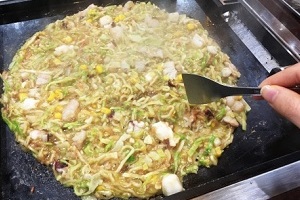
Monja-yaki is the original form of current "okonomiyaki" or "takoyaki".
It is known that monja-yaki was eaten in Edo in the early 19th century.
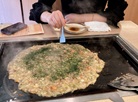
First, fry up chopped cabbage and other ingredients on a pan.
And gather them into a doughnut shape on the pan.
Then, pour the soup containing a little flour into the central space.
After the soup has thickened, mix them with a paddle and eat.
It is tasty to burn very slightly.
Tsukishima in the bay area is the most popular area, so there are many monja-yaki shops.
Fukagawa-don
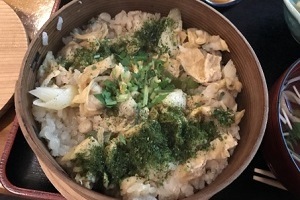
Fukagawa-don is one of the rice bowl dishes.
It is cooked by boiling clams with chopped negi (green onion) in miso soup and putting them on the rice in a bowl.
In previous times, many clams were caught at the mouth of Sumida River.
It is said that the fishermen in Fukagawa area created this in the middle of the 19th century.
Around Fukagawa area, there are many restaurants serving it.
Local specialties in Tokyo Metropolis
Edo Kiriko
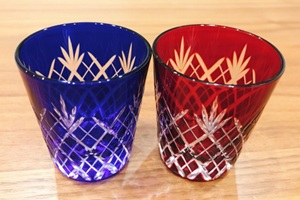
Kiriko is a technique to apply patterns by scraping the surface of glass.
It is said that the first engraving was made on the surface of glass in 1834 by a glass craftsman in Edo using emery powder.
Later, in the 1880s, a leader was invited from England and many craftsmen learned the technique.
At present, there are many workshops in the eastern area of central Tokyo, and the production continues as a traditional craft of Tokyo.